Katspaw Dinghy
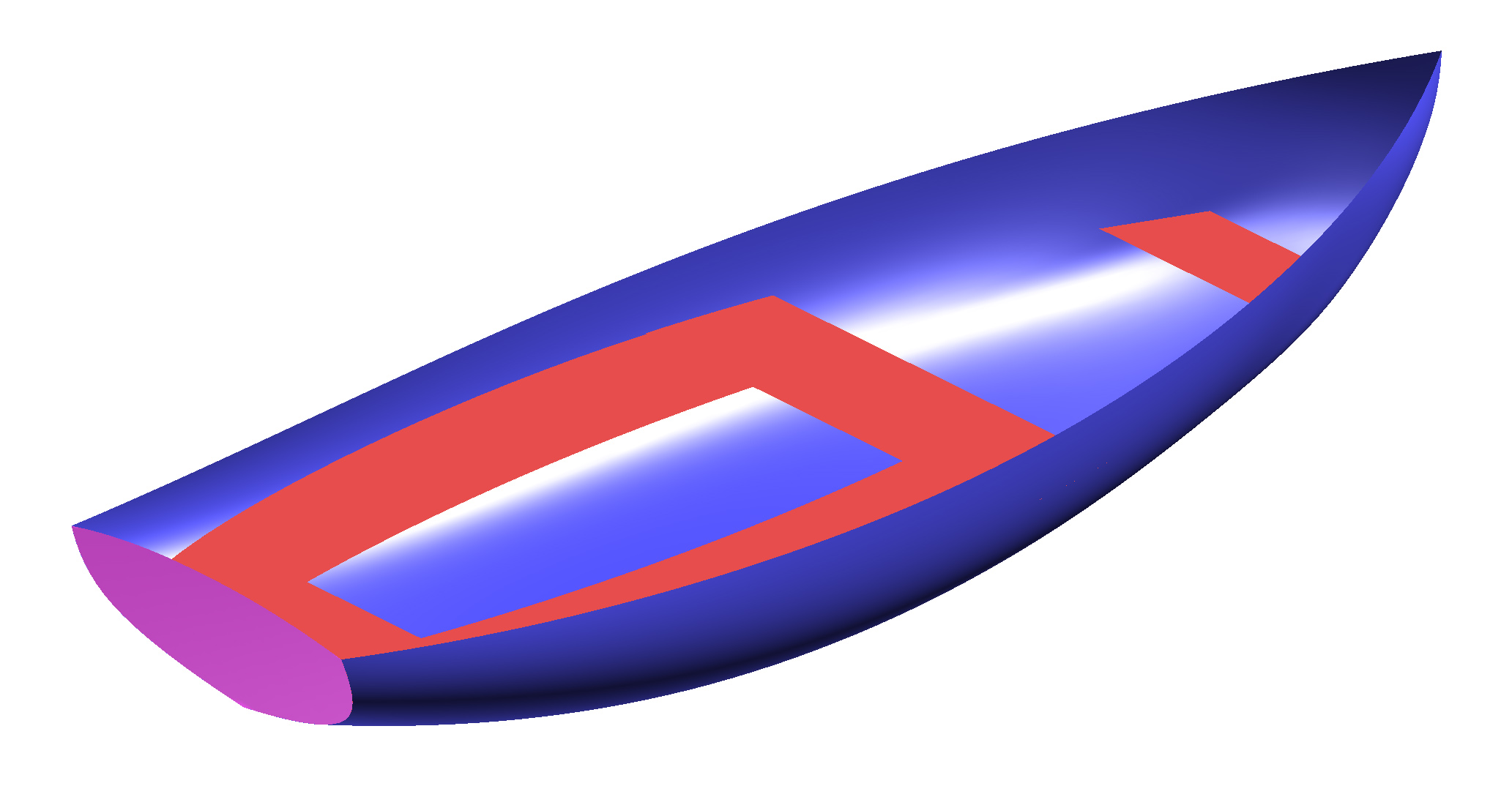
I designed this classic styled aluminum True Round design to introduce 'One of' metal boat Builder's to the concept of building a True Round hull by way of 'Approximate Development' that would not break the Bank.
Building this classic design will hone your metal-working skills before the possibility of taking on a larger 'Approximate Developed' true round hull design. This boat easyly be the 'Tender' for your larger steel or aluminum Build.
Lines Drawing
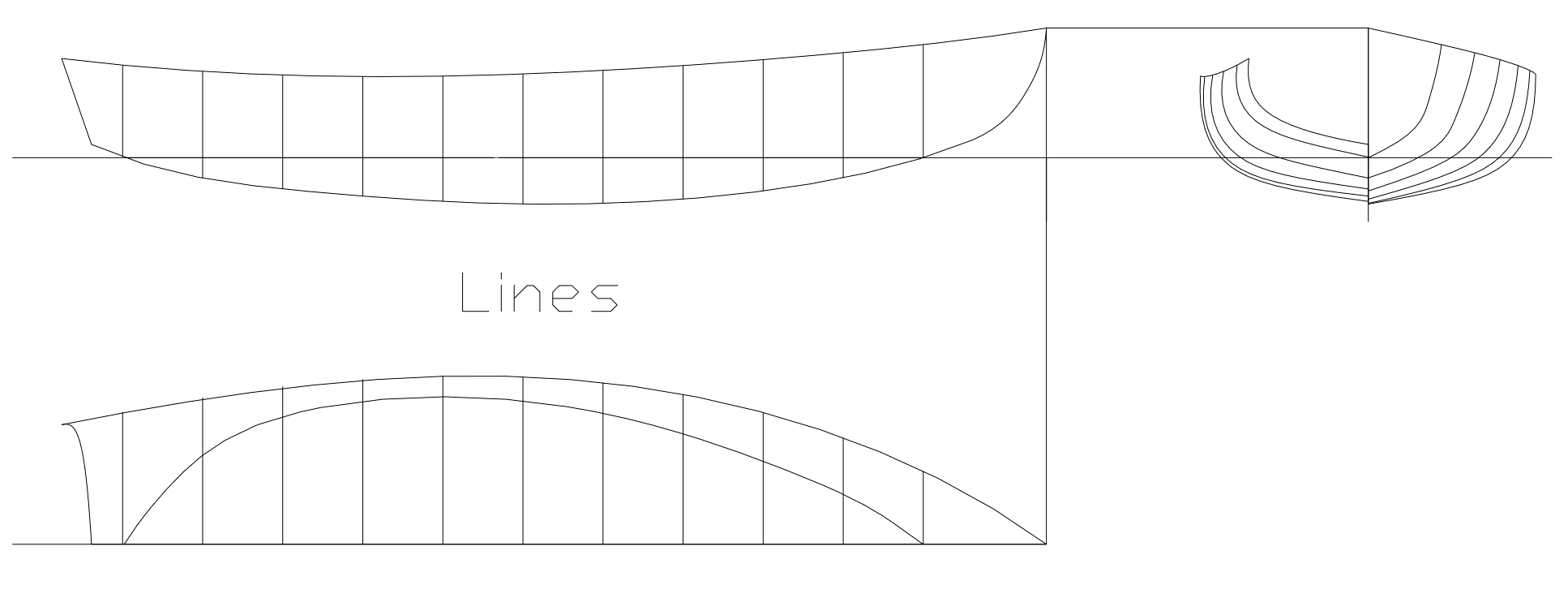
Hull Dimensions
<br>
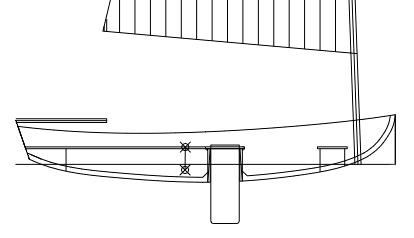
Static Hull Dimensions
- Length Overall - 153.750"
- Design Waterline Length - 125.250"
- Freeboard Forward - 20.125"
- Freeboard Aft - 15.500"
- Beam on Deck - 52.250"
- Beam at Waterline - 4.125"
- ---------------------------------------------
- Design Weight of Hull - 537.000#
- Calculated Weight of Hull - 302.500#
- Crew Weight - 200#
- Heavy Load Weight - 502.50
- -------------------------------------------
- Longintudinal Center of buoyancy - 85.210"
- Longintudinal Center of Gravity - 85.115"
- Vertical Center of buoyancy - 2.270" Below DWL
- Vertical Center of Gravity - 6.977" Above DWL
Floation
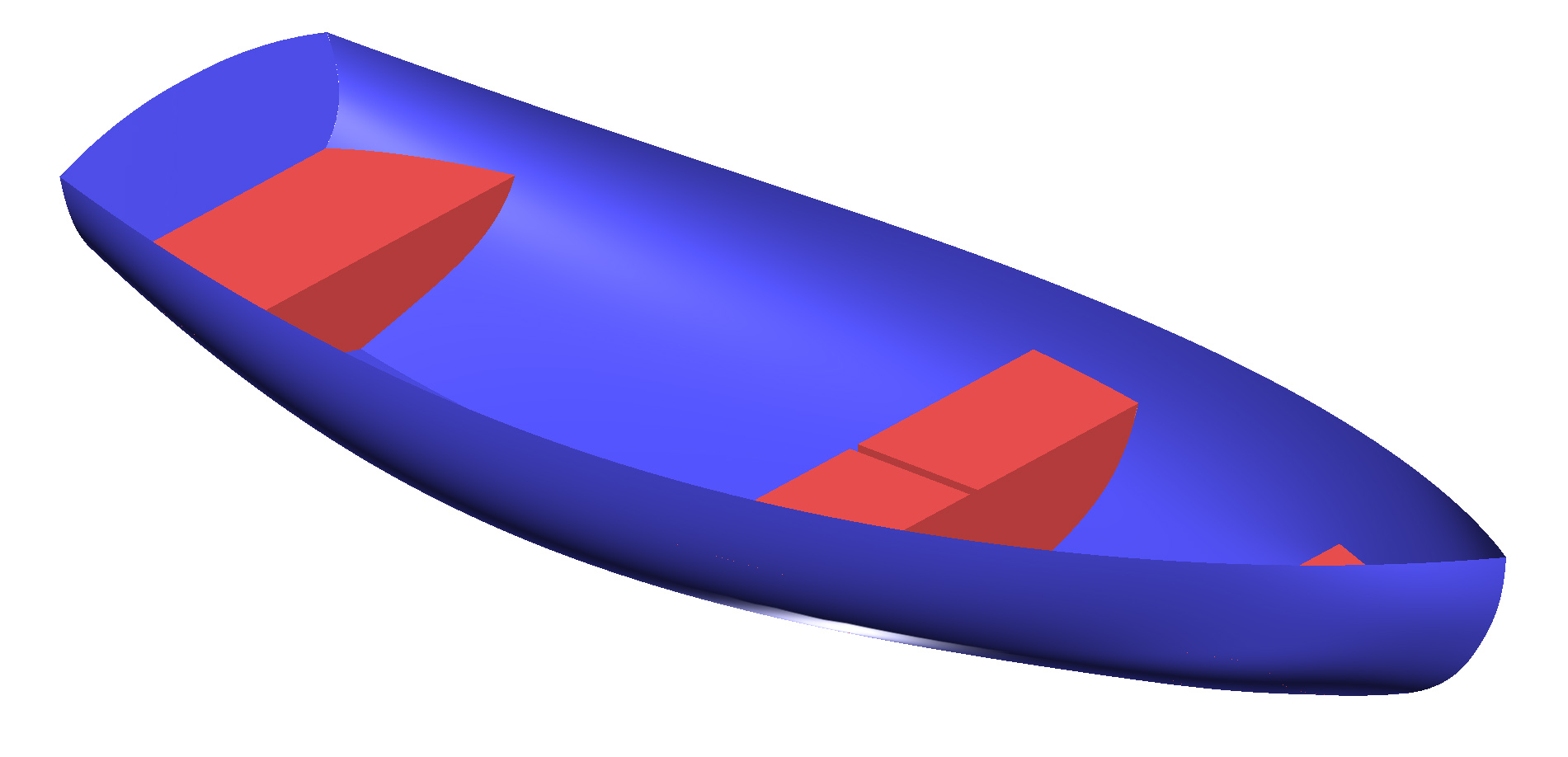
Being constructed of aluminum the boat has no possibility of floating in a swamped condition, therefore the 'Katspaw Dinghy' incorporates flotationneatly placed under the Fore deck, Helm seating, and aft deck.
According to my calculations the minimum floatation required, in cubic feet, to support a swamped Catspaw Dinghy and 400 pounds of crew (Two Hundred pounds more than the design weight) is 4.643 cubic feet.
The floatation designed into the hull under the Fore deck seat is 0.649 cubic feet, under the Center is 3.5230 cubic feet, and under the Aft seat 1.234 cubic feet.
Notably there is 0.763 cubic feet of reserve flotation. The image below shows these void spaces.
Construction
Framing System
The aluminum of the Katspaw Dinghy has no Transverse frames only Longintudinal frames.
The below rendering shows five (5) longitudinal frames between the sheer longitudinal and Center Vertical Keel - CVK, and the six transverse hull formers.

Initially the longitudinal frames will be supported by six (6) transverse hull Formers which will be removed after the shell plating is tack to the longintudinal frames.

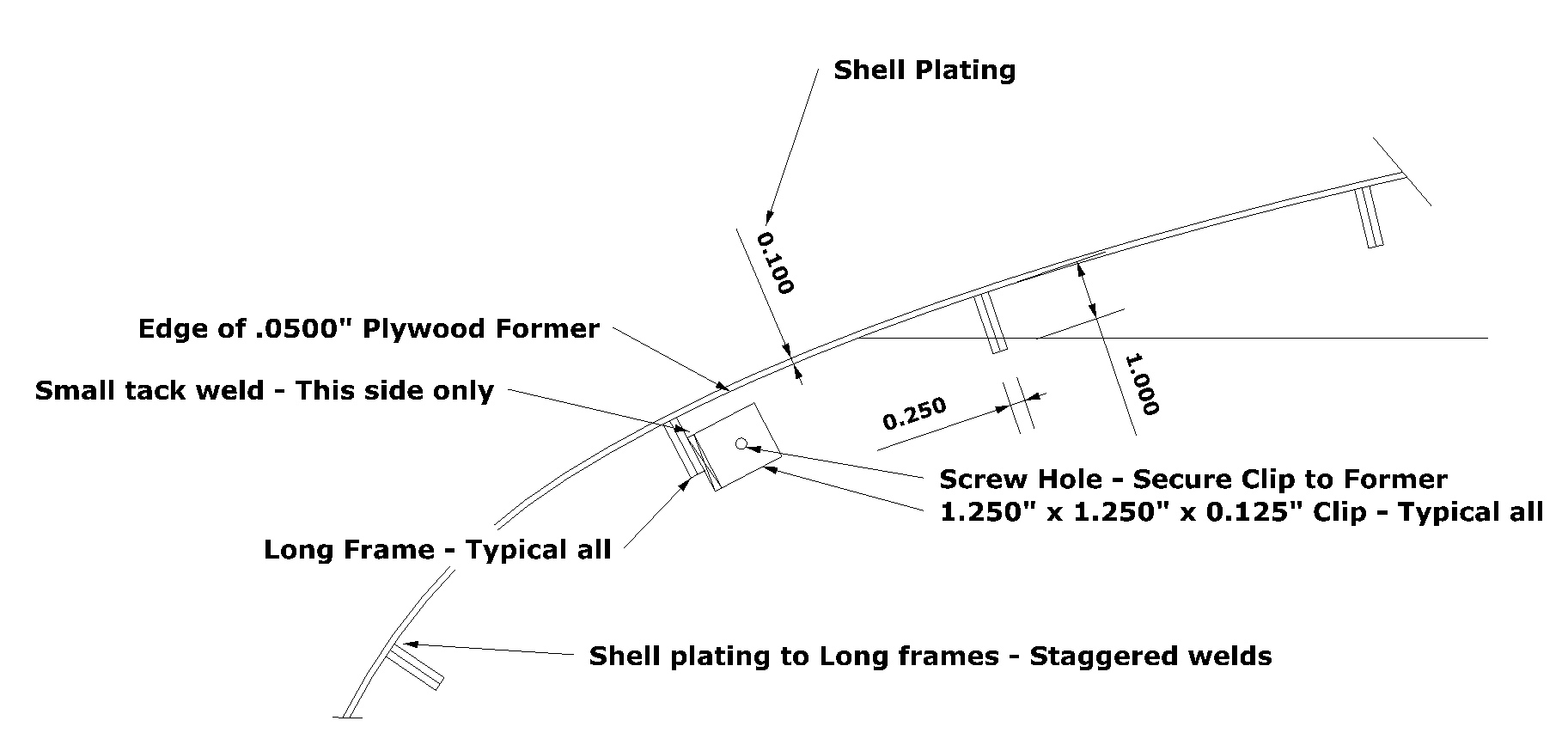
The following drawing show the angle tabs that are thru-bolted to the wood formers positioned to allow the aluminum longintudinal frames to be tack welded in the proper position.
As per 'Bezier Design and Construction' the longitudinals will be marked where it crosses every Former.
Since the longitudinal frames are the only point of reference to align the shell plating they will be held securely held in place by an aluminum angle clip thru-bolted to the hull former and tack welded to the longitudinal frame.
StrongBack
The Strongback shown below in plan. profile, and section views is constructed from 3.500" x 1.500 and 5.500" x1.500" common lumber. Other materials can be used if you like as long as you keep the distance's between Formers as shown.
Remember that the accuracy of the Build all starts here! Everything that follows depends on the accuracy of the Strongback.

Shell Plating:
Finial Building Plans for the Catspaw-Dinghy are still on the Drafting Board
(Coming Soon)
|
|
|
|
 |
 |
|
|
|
|
|
|
|
|